
Updated 2026-11-19
A broken garage door spring can be a $200 problem or a $1,000 problem, and from the driveway the two look the same. This guide lays out what garage door repair typically costs in metro Phoenix, what changes a quote, and how to read an estimate so two of them can be compared fairly.
Every figure below is a typical metro Phoenix range pulled from published 2026 cost guides and Phoenix-area company price lists. These are market ranges, not Sunbelt's prices and not a quote. Sunbelt Garage Door is a referral site, and the local garage door company that takes your call sets its own prices. The actual price comes from the technician after the door is looked at, and you hear it before any work starts.
The short version
- Service call or diagnostic fee: typically $0 to $150, often credited if you approve the repair.
- Torsion springs: roughly $250 to $550 for a single spring and $400 to $850 for the pair on a standard two-car door.
- Opener repair: roughly $100 to $400. A new chain or belt opener runs about $300 to $1,000 installed.
- Cables, off-track repair and rollers: each typically $100 to $400 per job.
- One replacement panel: roughly $260 to $900.
- A new door installed: about $800 to $2,200 for a single-car steel door and $1,500 to $4,000 for an insulated two-car steel door.
- Emergency or after-hours calls: some companies add $100 to $300, and some add nothing.
What a service call fee covers
Most repair companies charge a fee to arrive, inspect the door and tell you what is wrong. The typical range for that visit is about $50 to $150. Some Valley companies waive it when you approve the repair, and some charge no trip fee at all. Practice is not uniform, so ask.
Labor is the other number to understand. Hourly figures quoted for the Valley run from about $75 to $200, and a standard spring replacement usually takes 45 to 90 minutes. That wide spread is a good reason to ask whether a price is flat-rate or hourly before anyone starts work.
A good service call ends with a diagnosis, a written price and the freedom to say no. If the fee is credited toward the repair when you go ahead, the visit costs you nothing extra. If it is not credited, you pay for the diagnosis whether or not you hire the company, so compare that fee the same way you compare the repair price.
Torsion spring replacement
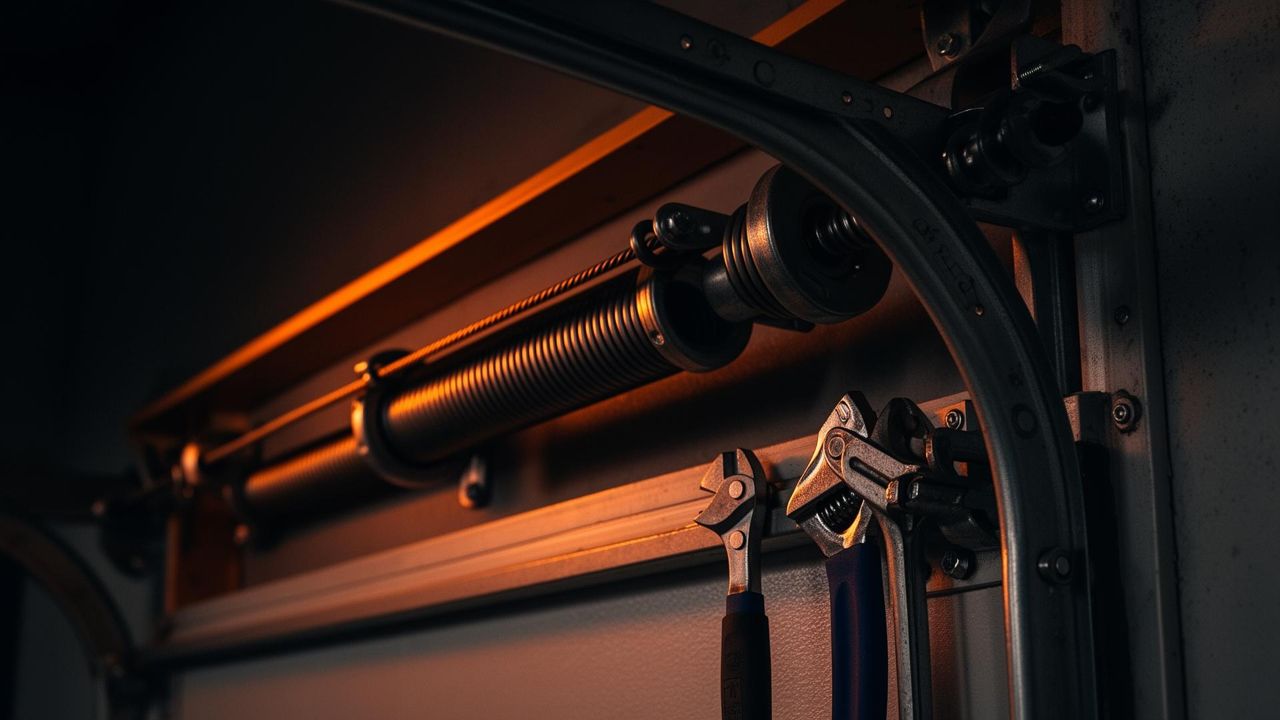
Most two-car doors have two torsion springs on a shaft above the door. This is the repair people ask about most, and the spread in prices is the widest.
- Single spring, installed: typically $250 to $550.
- Pair on a standard two-car door: typically $400 to $850.
- Heavy or oversized doors: $600 to $1,200 or more for the pair.
- Extension springs (the kind that run along the tracks): typically $175 to $400 for a pair.
National averages often look lower than Phoenix company price lists. One likely reason is that national figures blend single springs, extension springs, single-car doors and parts-only prices, while a Valley price for a complete two-spring job on a two-car door is a bigger job.
Replace one or both? The two springs on a door have been through the same number of cycles, so when one breaks the other is often near the end of its life. Replacing both usually adds roughly $150 to $300 over a single spring. That is often less than a second visit would cost, and it keeps the pair matched. More on the work itself is on the spring repair page.
Standard or high-cycle springs. Springs are rated in cycles, and one cycle is one full open and close. The standard residential rating is 10,000 cycles. Ratings of 25,000, 50,000 and 100,000 are common catalog options. How long each rating lasts at two, four, six or eight trips a day is worked out in what Valley heat does to garage door springs. The high-cycle upgrade typically adds about $50 to $100 per spring, which is cheap next to a second visit. For how heat and dust affect springs, see what Valley heat does to garage door springs.
Opener repair or replacement
Repairs typically run $100 to $400. Photo-eye realignment or replacement sits at the low end. Gear, circuit board and motor problems sit toward the top. Before paying for opener work, make sure the door itself is balanced. An out-of-balance door makes the opener work harder and wears it early, so a straining opener is sometimes a spring problem in disguise. The opener repair page covers common failures.
A new opener by drive type, typical installed ranges:
- Chain drive: usually the lowest price, often $300 to $700 installed.
- Belt drive: a step up, quieter, often $400 to $900 installed.
- Wall-mount (jackshaft): higher, commonly $700 to $1,500 installed.
Put together, the typical installed range for a chain or belt opener is about $300 to $1,000. LiftMaster, Chamberlain and Genie are the brands most often installed, and LiftMaster and Chamberlain are made by the same parent company. A brand's price range reflects its model lineup more than its quality, so compare specific models rather than brand names.
Replacing tends to make more sense when:
- The repair would cost more than about half the price of a new installed unit.
- The opener is more than 10 to 15 years old.
- It was built before the 1993 federal rule requiring added entrapment protection such as photo eyes.
- The same opener has failed more than once in a year.
Cables, off-track doors and rollers
- Cable replacement: typically $100 to $400 per door. A spring and cable replaced together often lands between $575 and $900. Ask whether the quote includes both cables and a check of the drums. See cable repair.
- Off-track repair: typically $125 to $400. Resetting a door on straight track is at the low end. Bent track sections, damaged rollers or damaged panels push it up. See off-track repair.
- Roller replacement: typically $100 to $250 for a full set on a two-car door. Nylon rollers cost more than steel and run quieter, and rollers with more ball bearings generally last longer.
Panels and full door replacement
Panel replacement. Most homeowners pay roughly $260 to $900 for one panel, about $520 to $1,800 for two and $780 to $2,700 for three. Labor typically takes one to three hours per panel. Two things push the price up. The new panel has to match the existing door, and when a model has been discontinued a match can be hard to find. And once more than two panels need work, ask for a whole-door price for comparison. See panel replacement.
A new door, installed:
- Single-car steel door: $800 to $2,200.
- Insulated steel, two-car: $1,500 to $4,000.
- Composite or fiberglass, two-car: $2,400 to $5,500.
- Aluminum with full-view glass, two-car: $3,000 to $7,000.
- Real wood or custom carriage-house style, two-car: $3,500 to $10,000 and up.
Insulation is the main upgrade decision. Stepping up from a single-layer door to an insulated one typically adds $150 to $600, and in Phoenix heat many homeowners find it worth the money. The insulated garage doors guide explains R-value and what to ask for.
Things that move the total on a new door:
- Installation labor, typically $250 to $500.
- Removal and haul-away of the old door, about $100 and sometimes not included.
- A taller door: going from 7 to 8 feet adds roughly $150 to $400.
- A new opener bundled in, adding roughly $300 to $900. Whether the opener is included is often the biggest difference between two quotes.
- Permits, which vary by city. Ask whether the quote covers one if your city requires it.
Door prices have also risen since 2024, so a cost guide written in 2022 or 2023 understates what a door costs now. The installation page covers the process once you have chosen a door.
Emergency and after-hours premiums
The typical premium for an emergency or after-hours call is $100 to $300 on top of the repair. Some companies charge a flat after-hours dispatch fee. Others charge nothing extra. If the door is closed and nobody needs the car, waiting until morning can avoid the premium. If the door is stuck open or the garage cannot be secured, the premium may be worth paying. Either way, ask for the total price, premium included, before the visit is booked. The emergency repair page explains what counts as urgent.
What pushes prices up in metro Phoenix
National averages are a starting point. These factors explain why Valley quotes can land above them.
- Heat and use. Triple-digit heat dries lubricant on spring coils and monsoon dust adds abrasion, so springs and rollers wear out sooner. The effect shows up as more frequent repairs. The same spring costs the same whether it lasts four years or ten.
- Heavy and tall doors. Insulated steel and wood doors weigh more and need heavier, higher-cycle springs. Many newer Valley homes have tall two-car and three-car doors, which cost more to spring and to replace.
- HOA rules. Many Valley neighborhoods have exterior guidelines on door color and style. The cost effect is usually indirect: fewer styles to pick from, a color match and approval time. Get the guidelines and written approval before ordering a door.
How to compare garage door quotes
A quote is only comparable to another quote if both say the same things. A usable written quote shows:
- Parts and labor listed separately, plus any trip fee and whether it is credited.
- For springs: how many are being replaced, the wire size, length, inside diameter and cycle rating.
- Whether cables, drums, bearings and rollers were inspected, and what was found.
- Any coverage on parts and on labor, in writing, and what voids it.
- The company's business name and contractor license number if the job requires one.
- The total, including tax, haul-away and any after-hours charge.
Questions worth asking before you say yes:
- Is the price flat-rate or hourly, and what happens if the job takes longer?
- Is the service fee credited toward the repair?
- Will the technician test the door's balance and auto-reverse after the work?
- If another worn part turns up, will the technician stop and call you before charging for it?
- What cycle rating are the new springs?
Red flags
- A spring price far below the market. A bait-and-switch $49 spring special is a common pattern: the low number gets the technician in the door, and the real price appears on site.
- A price over $500 for a single standard torsion spring with no itemized explanation.
- Pressure to replace the entire door when only a spring or a cable failed.
- A quote that changes on site without a clear reason.
- A refusal to put anything in writing.
On contractor licensing, the Arizona Registrar of Contractors requires a license when the total project, labor and materials together, is over $1,000 or when the work needs a local permit. A new door or opener installation can cross that line, and a single spring repair often does not. You can check any contractor at roc.az.gov. This is general information, not legal advice.
Repair or replace
Springs, cables, rollers and seals are wear items. Replacing one does not mean the door is near the end of its life. Three checks help.
- The half-price test. When a repair costs more than about half the price of a comparable new door, replacement usually makes more financial sense. If a comparable insulated two-car door costs $3,000 installed, the line is $1,500. A pair of springs at $400 to $850 does not cross it. Three damaged panels might.
- Age and stacking. A door more than 20 years old, or one with several parts failing at once, usually justifies replacement. Doors under 15 years old are usually worth repairing.
- Panel damage. Once more than two panels need replacing, ask for a whole-door price for comparison.